Back to feed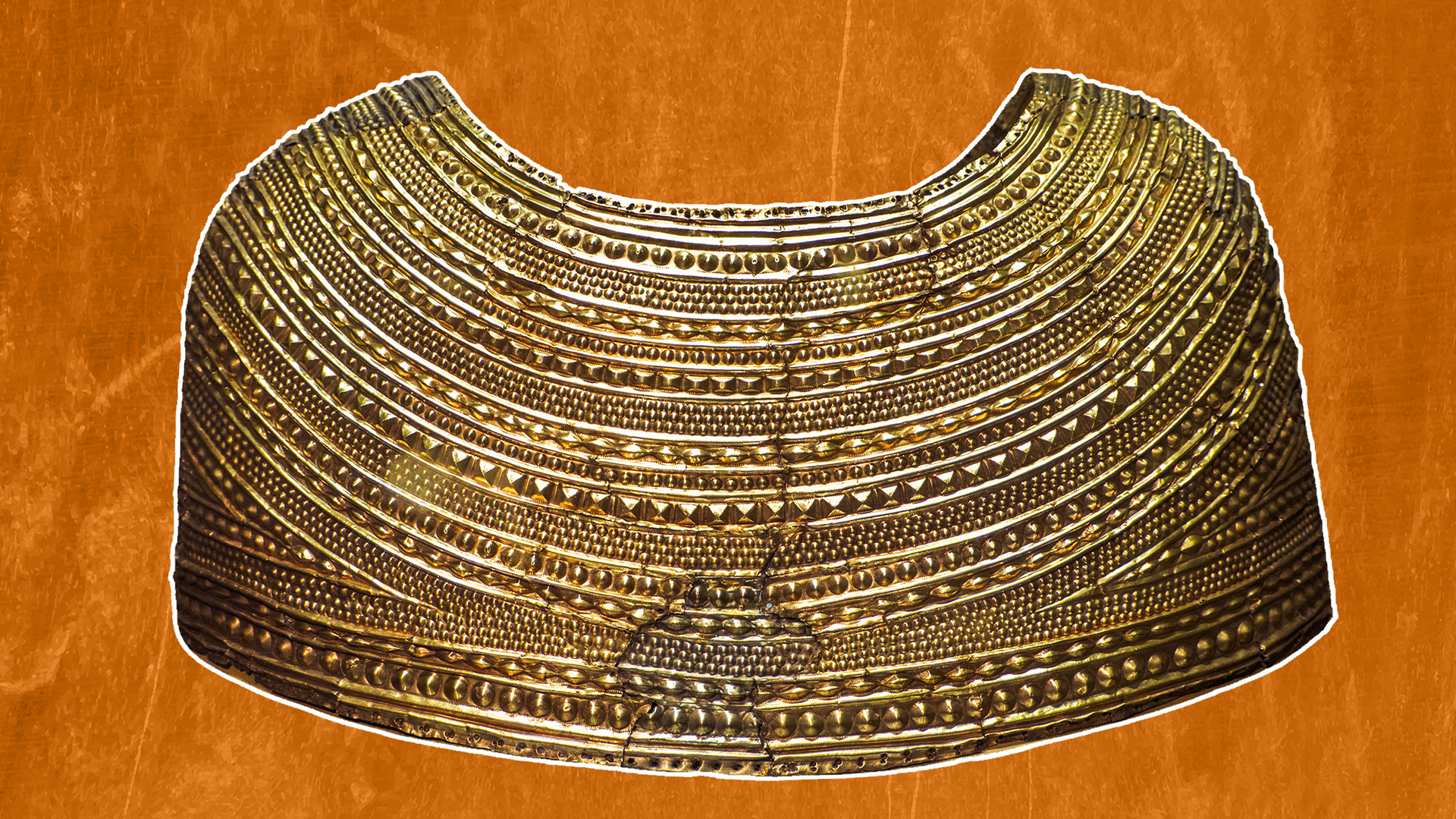
Product
More
Legal
© 2026Daily24.All rights reserved.
Name: Mold gold cape
What it is: A hammered gold accessory
Where it is from: Bryn yr Ellyllon (Goblins' Hill), Wales
When it was made: Circa 1900 to 1600 B.C.
In 1833, stone quarry workers discovered an ancient burial mound at Goblins' Hill near the town of Mold in Wales. At the center was a stone-lined grave that contained a fragmented skeleton and a gold, cape-like accessory that had been crushed over time. The Mold gold cape has a unique shape and style, and it is one of the finest examples of prehistoric goldwork ever found, according to the British Museum, where the artifact is on display.
The cape dates to Britain's Early Bronze Age (2500 to 1200 B.C.), a time that saw a metalworking revolution as artisans shifted from crafting flint tools to making weapons and jewelry out of gold, copper and bronze.
When the cape was originally unearthed, experts assumed that it had belonged to an ancient warrior, chief or religious leader, due to the spectacular design of the object, Benjamin Roberts, then curator for the European Bronze Age collections at the British Museum, told the BBC in 2010. But after the broken pieces of the cape were put back together, the small size of the artifact suggested it may have been worn by a woman or a child.
The Mold gold cape measures roughly 9.3 inches (23.5 centimeters) tall and 18.3 inches (46.5 cm) wide. It weighs about 1.2 pounds (560 grams) and was probably crafted from a single lump of gold about the size of a ping-pong ball.
The gold ingot was beaten incredibly thin, fashioned into a cape, and then embellished with decorations that mimicked beads or necklaces, according to the British Museum. Additionally, several hundred amber beads were found on the cape in the grave, which likely added to the gilded appearance of the accessory. Perforations around the neck opening suggest the cape originally had a lining made of leather or another perishable material that did not survive.
Because the gold cape, when worn, would restrict a person's upper arm movements, it may have been a ceremonial accessory that conferred religious authority and was worn only on special occasions. But experts are still unsure why the cape was buried in a grave. Nor can they confirm whether the person it was interred with was male or female, as the skeleton was not recovered by the quarry workers in the 19th century.
"The cape is unique — there is really nothing to compare it to in the whole of Europe," Roberts told the BBC. "This makes it more difficult to understand why it was made and what significance it had."
For more stunning archaeological discoveries, check out our Astonishing Artifacts archives.
Inuit FigurineMaya Death UrnBattersea ShieldCan you put together last week's Astonishing Artifact?